 20% Off
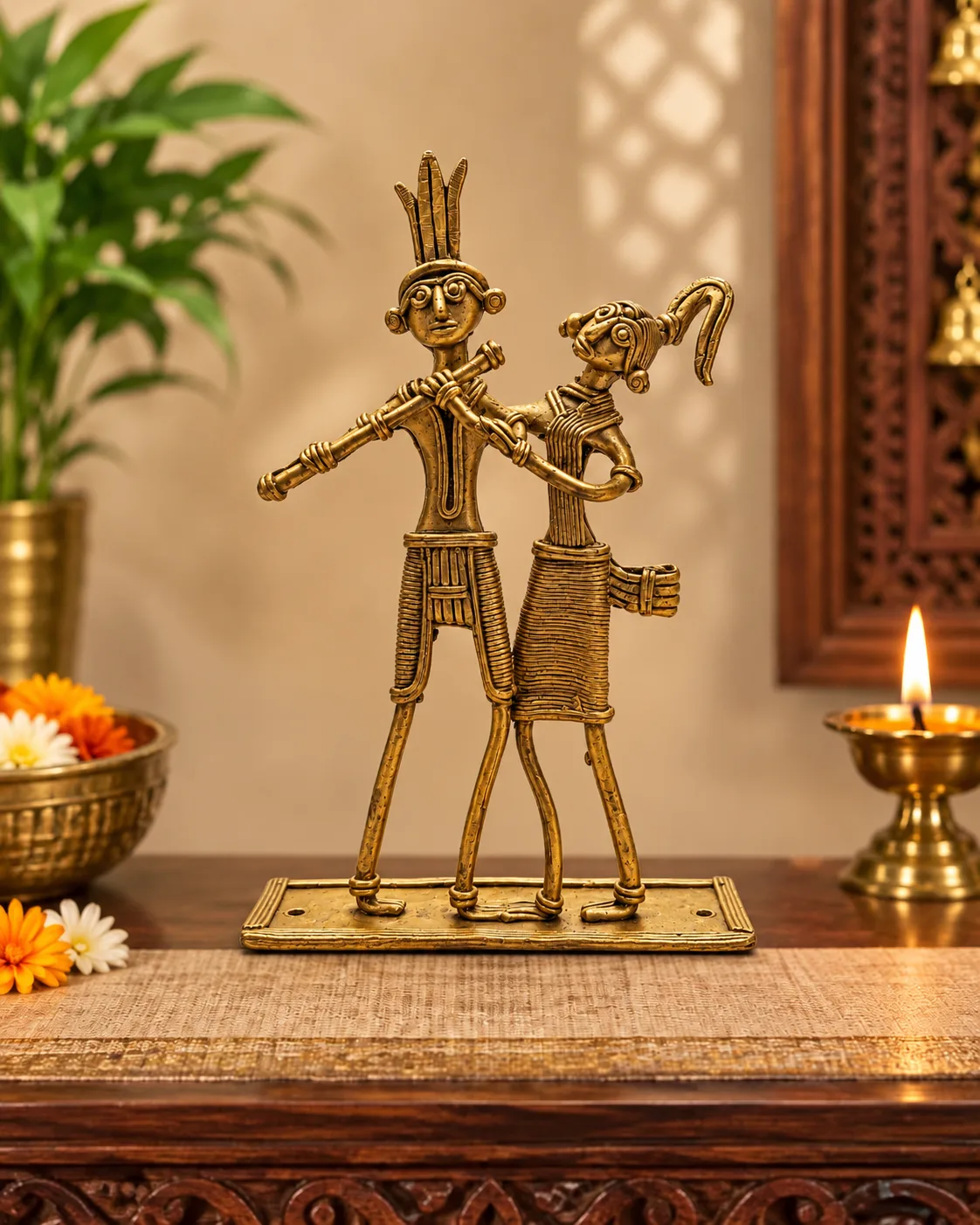
Traditional Brass Finish Radha Krishna Flute Playing Showpiece
₹ 1,200.00
₹ 1,500.00

showpiece
Before the dawn of modern metallurgy, Indian artisans crafted sacred bronzes using the ancient lost-wax (cire perdue) casting technique. At Roy Saudagar, we bring the authentic, primitive elegance of Bankura Dokhra directly from the artisan hearths of Bikna village into sacred spaces, timeless collections, and contemporary architectural homes across the globe.
Dokhra (also spelled Dhokra or Dokra) is non-ferrous metal casting using the ancient lost-wax (cire perdue) casting technique. It is the very same metallurgical process that shaped the world-famous bronze figurine of the Dancing Girl of Mohenjo-Daro dating back to 2500 BCE.
Centuries ago, the nomadic metal-smith artisans known as the Dhokra Kamar migrated across central India and chose the red laterite soil of Bankura in West Bengal as their permanent sanctuary. Settling primarily in the quiet hamlet of Bikna, these artisans fused tribal spirituality, forest folklore, and riverbed clays into one of humanity’s oldest living craft traditions.
Roy Saudagar takes its name from Bengal's revered merchant-patrons (Saudagars) who once championed indigenous arts across maritime trade routes. We stand as proud custodians of this patrimony, eliminating exploitative middlemen and ensuring our master karigars receive the honor, fair remuneration, and global stage their generational mastery commands.

A single Dokhra artifact takes between 15 to 30 days of patient, painstaking manual labor. There are no factory assembly lines, no stamping dies, and no synthetic adhesives.
Artisans hand-sculpt a rough core using fine alluvial clay from local Bankura riverbeds, mixed with rice husk and river sand. Once dried in the gentle morning sun, it forms the inner skeleton.
A blend of natural beeswax, dhuna (sal tree resin), and mustard oil is extruded through a wooden piston press (picchki) into fine threads. Artisans wind each thread strand-by-strand around the core, creating Dokhra's hallmark spiral filigree.
The wax model is coated with multiple layers of fine termite-mound soil (ude maati) and cow dung paste. Inlets and air ducts are sculpted into the mould to ensure a smooth flow of molten metal.
The sealed mould is placed into a traditional open-hearth furnace (bhatti). As the kiln reaches intense heat, the inner wax completely melts and drains out through drainage ducts, leaving an exact hollow chamber.
Red-hot molten scrap brass or bell metal (kansa) heated beyond 1,000°C is poured into the hollow cavity, capturing every microscopic wax-thread contour and tribal texture with remarkable precision.
Once cooled, the sacrificial clay mould is carefully chipped away by hand. The raw bronze is chiseled, wire-brushed, and hand-polished to unveil the golden, organic, antique finish of authentic Dokhra.
In 2018, Dokra craft of West Bengal (with Bikna, Bankura at its epicentre) was awarded the coveted Geographical Indication (GI) status by the Government of India, recognizing its irreplaceable regional heritage and distinct metallurgical identity.
Unlike Bastar or Odisha Dokra which often features flat planes, Bankura Dokhra is celebrated for its dense, continuous helical wax-thread wrapping that imparts a rhythmic, textile-like texture to solid brass metalwork.
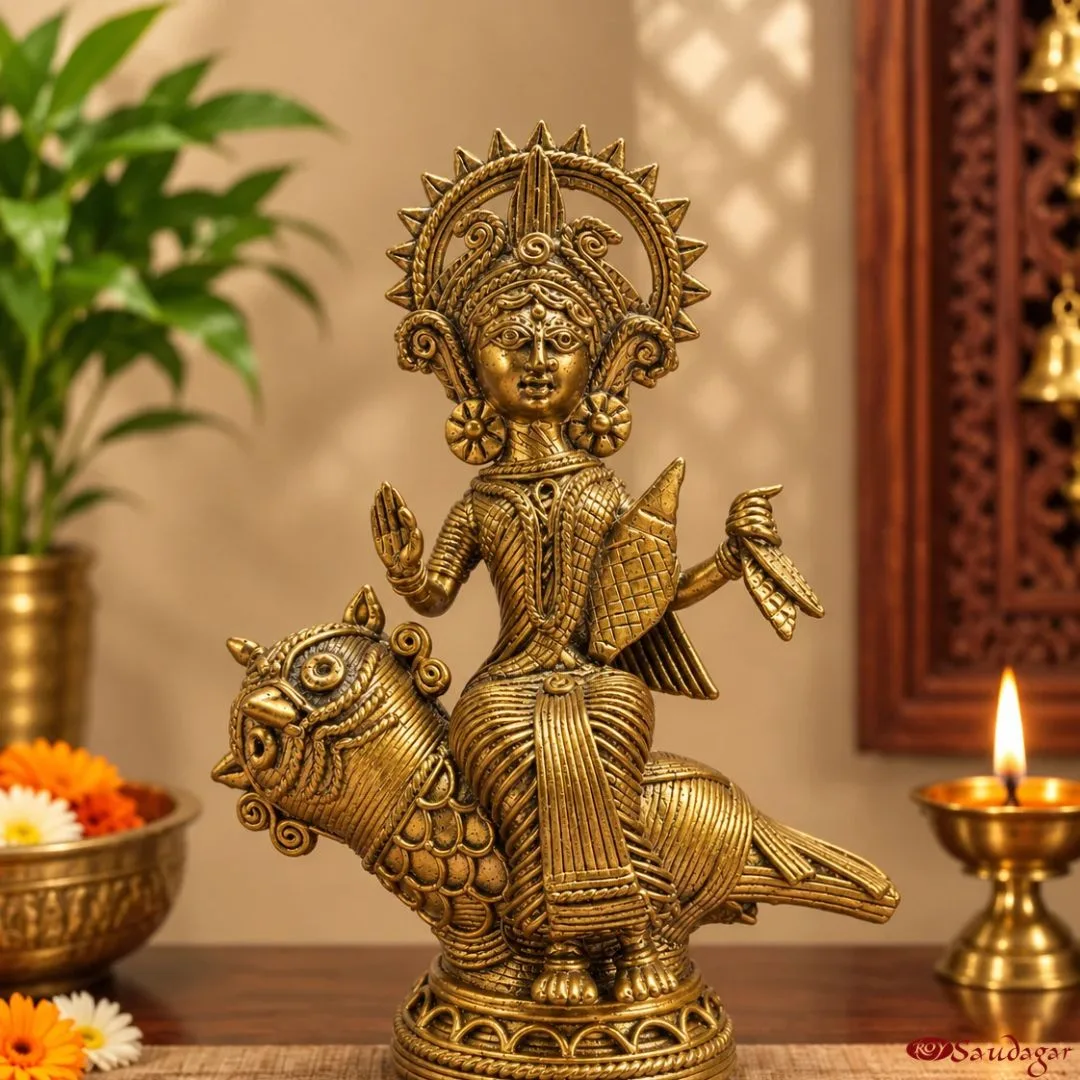
From the world-renowned elongated Bankura Ghora (Horse) with erect ears and graceful arching neck, to traditional Durga, Ganesha, and Lakshmi murtis, Bankura creates motifs deeply embedded in Rarh Bengal’s devotional heritage.
No hazardous industrial solvents or toxic chemicals are ever used. From sal-resin wax binders to alluvial clay from natural riverbeds and recycled bell metal, our Dokhra is deeply grounded in ecological harmony.
Each silhouette in our catalogue is created by third- and fourth-generation master karigars of Bankura. Discover our authentic lost-wax brass sculptures available for your home and sanctum.
20% Off
showpiece
 25% Off
GIFTING
 30% Off
Women Collection • Women
 25% Off
Men Collection • Men
 30% Off
Men Collection • Men
Test Category
Luxury Footwear
Luxury Footwear
Every Dokhra sculpture you acquire directly protects and enriches an artisan family in Bankura.
We work directly with craft co-operatives and artisan households in Bikna, ensuring fair prices that honor their painstaking manual time and generational skill.
We guarantee genuine lost-wax bronze casting. No hollow machine pressings, zero resin mock-ups, and no counterfeit chemical patinas.
Solid brass idols require engineered protection. Every parcel is safely cocooned in reinforced packaging to arrive unblemished at your doorstep.
A portion of proceeds goes towards training youth apprentices in Bikna so this 4,000-year-old art form continues to thrive for generations to come.

Dokhra artifacts are made of durable brass and bronze alloys designed to endure for centuries. Over time, exposure to air develops a rich, natural antique patina that enhances its primitive allure.
Read what art connoisseurs, homeowners, and temple patrons say about their Roy Saudagar Dokhra pieces.
"The cushioning on ROY SAUDAGAR kolhapuris is unmatched. Wore them to a festive wedding function for 8 hours without any bite!"
"Exquisite leather quality and artisanal finishing. The unboxing felt like a true high-end luxury experience."
"The subtle gold accents and precision stitching elevate every outfit. Ordering my second pair today!"
Explore detailed answers regarding Bankura Dokhra origin, metallurgy, authenticity, and custom orders.
Bankura Dokhra (crafted in Bikna village) is internationally acclaimed for its rhythmic, fine-wire filigree, elegant elongated proportions, and deep connection to Bengal’s folk spirituality. Recognized with a prestigious Geographical Indication (GI Tag), its unbroken lineage is preserved by hereditary artisan families.
The process starts with an inner clay core coated with natural beeswax, sal-resin, and mustard oil. The artisan meticulously winds wax threads by hand to sculpt intricate details before covering it with multiple clay jackets. When fired in an open furnace, the beeswax melts and drains out ("lost wax"). Molten brass is poured into the hollow void to solidify into a permanent metal sculpture.
Yes, absolutely. Because the clay outer shell must be broken to free the cooled bronze sculpture, the mould is forever destroyed with each casting. Consequently, each piece is an unrepeatable original with subtle natural variations in weight, patina, and detail.
We use high-grade brass, copper-zinc alloys, and bell metal (kansa). The preparatory craft utilizes natural alluvial clay, rice husk, mustard oil, and pure resin (dhuna) from Sal forests. No toxic lead or hazardous synthetics are ever introduced.
Yes. We regularly collaborate with interior designers, cultural institutions, and collectors for custom idol commissions, large-scale Bankura horses, and curated corporate gifting boxes. Please contact our concierge atelier with your specifications.
Because solid cast metal artifacts require superior transit protection, each item is swaddled in multi-layer shock-absorbent thermal foam, wrapped in soft protective linen, and encased in high-density heavy-duty export cartons. We provide insured, trackable express delivery across India and worldwide.
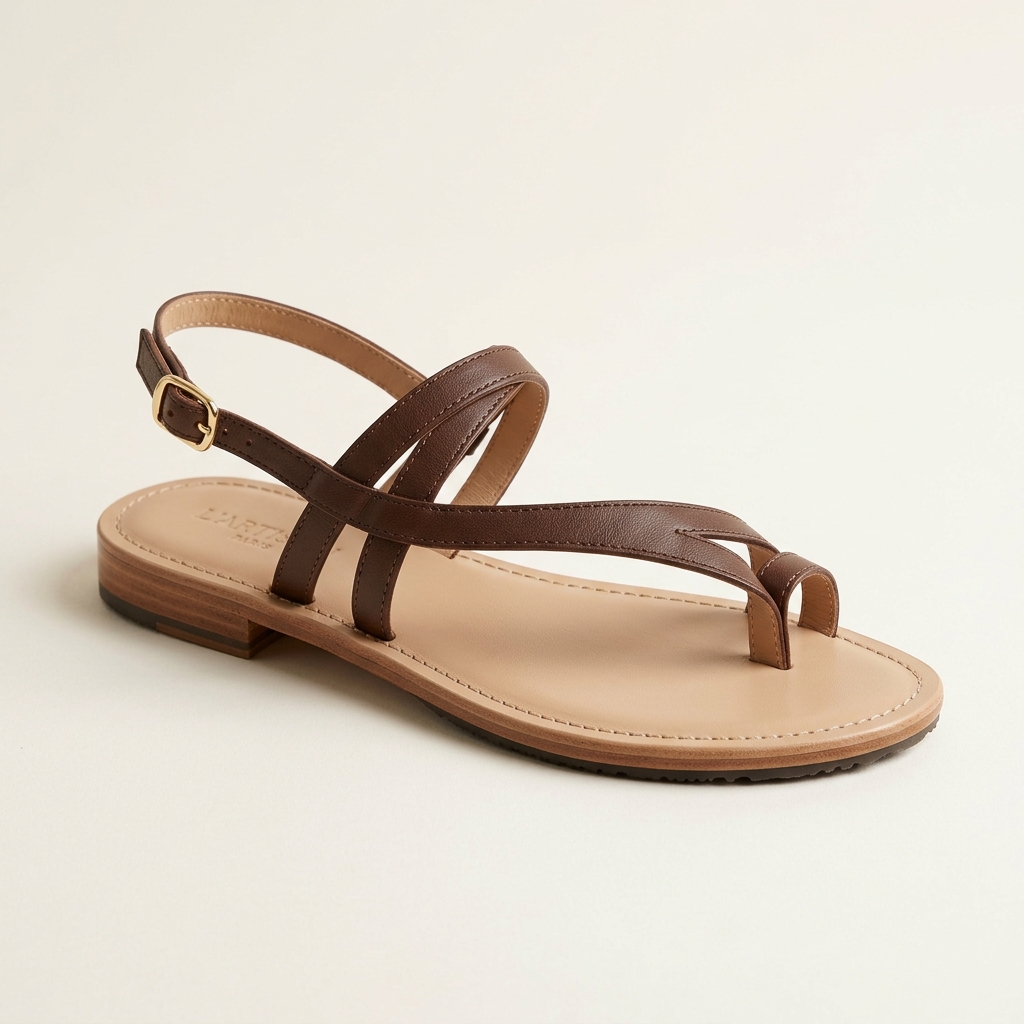
Discover our handcrafted luxury footwear collections.
Explore Collections